Can Artificial Intelligence Replace Your Plastic Surgeon? Dr. Bouraoui Kotti Weighs In
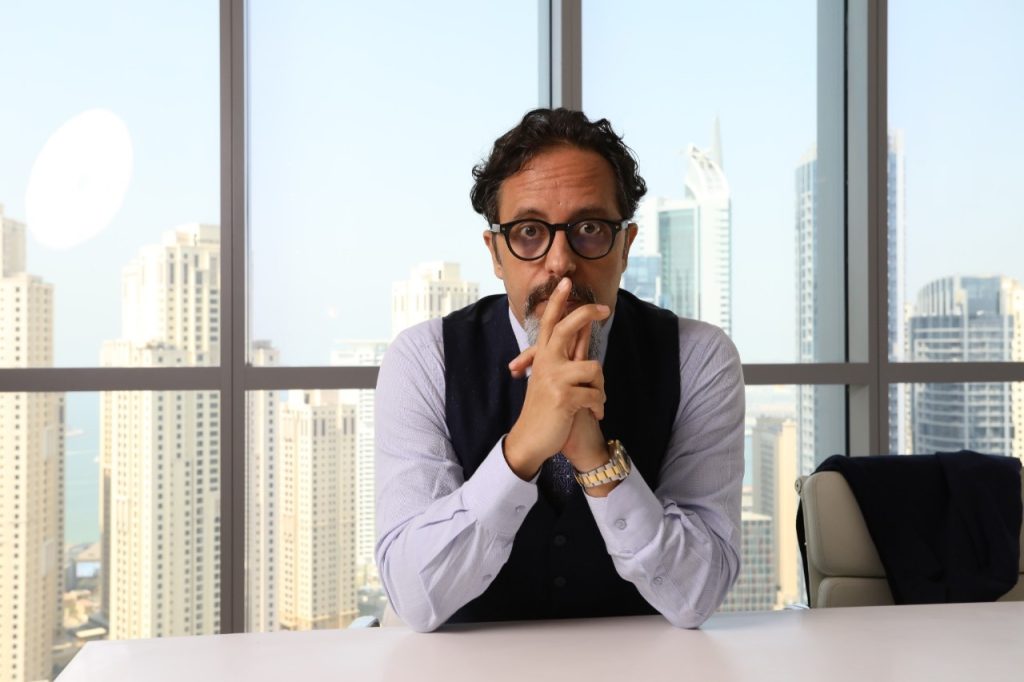
Can Artificial Intelligence Replace Your Plastic Surgeon?
Artificial intelligence is no longer a trend—it’s infrastructure. From beauty filters to medical imaging, AI is reshaping how people perceive themselves and make aesthetic decisions.
But plastic surgery isn’t just about visuals. It’s about anatomy, judgment, and experience.
So the real question is: can AI replace a plastic surgeon—or is it simply redefining the patient journey?
AI Is Already Redefining Beauty
Artificial intelligence is actively reshaping global beauty standards.
- AI systems analyze facial symmetry and proportions at scale
- Personalized recommendations are now driven by machine learning
- Entire beauty concepts—from campaigns to virtual influencers—are AI-generated
At the same time, the Middle East beauty market is rapidly evolving, with increasing demand for personalized, technology-driven beauty solutions and a projected value reaching tens of billions of dollars (CosmeticsDesign-Europe.com)
This shift creates a new reality: 👉 Beauty is no longer just perceived—it’s calculated.
The Original Cosmopolitan Feature
This discussion was first explored by 👉 Cosmopolitan Middle East
in their article: 👉 https://www.cosmopolitanme.com/beauty/artificial-intelligence-beauty-world
The feature asks a critical question: As AI becomes more advanced, where does human expertise still matter?
The Rise of AI in Plastic Surgery
AI is not theoretical in aesthetic medicine—it’s already being used.
- Surgical planning tools analyze proportions and simulate outcomes
- Image recognition helps classify anatomical conditions
- AI improves patient education before consultations
At the same time, global demand for aesthetic procedures continues to grow, driven by personalization and natural-looking results.
This creates a major shift: 👉 Patients now begin their journey with AI—not surgeons.
Dr. Bouraoui Kotti: Bridging Surgery and Technology
Dr. Bouraoui Kotti represents a new generation of plastic surgeons—those who integrate innovation without losing the human element.
With international recognition and extensive experience, his work focuses on:
- Natural, proportion-based outcomes
- Advanced breast surgery techniques
- Research-driven aesthetic decisions
But what sets him apart is his approach to AI:
👉 Not as a replacement—but as a patient education tool.
Beauty as a System: Science, Art, and Mathematics
At the core of Dr. Kotti’s philosophy is a structured understanding of beauty.
His research explores how aesthetic harmony aligns with:
- The golden ratio
- Fibonacci sequences
These patterns appear in nature, art, and human anatomy.
The implication is powerful: If beauty can be measured—it can be modeled.
And that’s where AI becomes relevant.
BreastApp: AI Before the Consultation
To translate theory into practice, Dr. Kotti developed BreastApp—an AI-powered tool designed to guide patients before surgery.
How it works:
- Upload two anonymous images
- AI analyzes anatomical landmarks
- It classifies conditions like breast ptosis
- It suggests potential procedures
This transforms the consultation process.
Instead of uncertainty, patients arrive:
- Informed
- Confident
- Prepared
And importantly, the app reinforces a key message: 👉 you don’t need surgery to feel confident
Privacy and Ethical AI
AI in healthcare must address one critical issue: trust.
BreastApp is designed with privacy-first principles:
- No facial identity
- No stored images
- No data tracking
This reflects a broader industry shift toward ethical AI in medicine.
AI vs Human Expertise: Where the Difference Lies
AI is powerful—but limited.
It can:
- Analyze proportions
- Detect patterns
- Suggest possibilities
But it cannot:
- Physically assess tissue
- Evaluate skin elasticity
- Adapt during surgery
- Apply real-world surgical judgment
Plastic surgery is not just planning—it’s execution under uncertainty.
That’s where human expertise remains irreplaceable.
Frequently Asked Questions About AI in Plastic Surgery
Can AI perform plastic surgery?
No. AI assists with planning and analysis, but surgery requires human expertise and real-time decision-making.
Is AI used in plastic surgery today?
Yes. AI is used for:
- Image analysis
- Simulation
- Patient education
Is AI accurate in aesthetic analysis?
AI can reach high accuracy levels in structured analysis, but results still depend on data quality and human interpretation.
Will AI replace plastic surgeons?
No. AI will enhance surgeons—not replace them.
Final Verdict: AI Is an Assistant, Not a Replacement
Artificial intelligence is not replacing plastic surgeons.
It’s transforming how patients prepare, understand, and decide.
AI becomes:
- A pre-consultation layer
- A decision-support system
- A confidence tool
But the final outcome still depends on human expertise.
The Bigger Shift
The real transformation is happening on the patient side.
Patients today are:
- More informed
- More analytical
- More aware of their options
And that changes everything.
The future of plastic surgery is not AI vs humans.
It’s:
👉 AI-enhanced human expertise
Where technology informs decisions— but experience delivers results.
This article is inspired by and adapted from the original feature published by Cosmopolitan Middle East, expanded with verified insights on artificial intelligence and its growing role in the global beauty industry.


Specialist Plastic Surgeon · EBOPRAS Certified · Dubai UAE
Individualized Surgical Planning
Clinical Focus on Anatomical Symmetry. Dubai UAE
Dr. Bouraoui Kotti is a Specialist Plastic Surgeon (EBOPRAS-certified) with over 20 years of clinical experience. At Seline Clinic Dubai, he provides aesthetic and reconstructive surgery based on international standards.